 USA
USA Analytical Standards
 Controlled Research Environment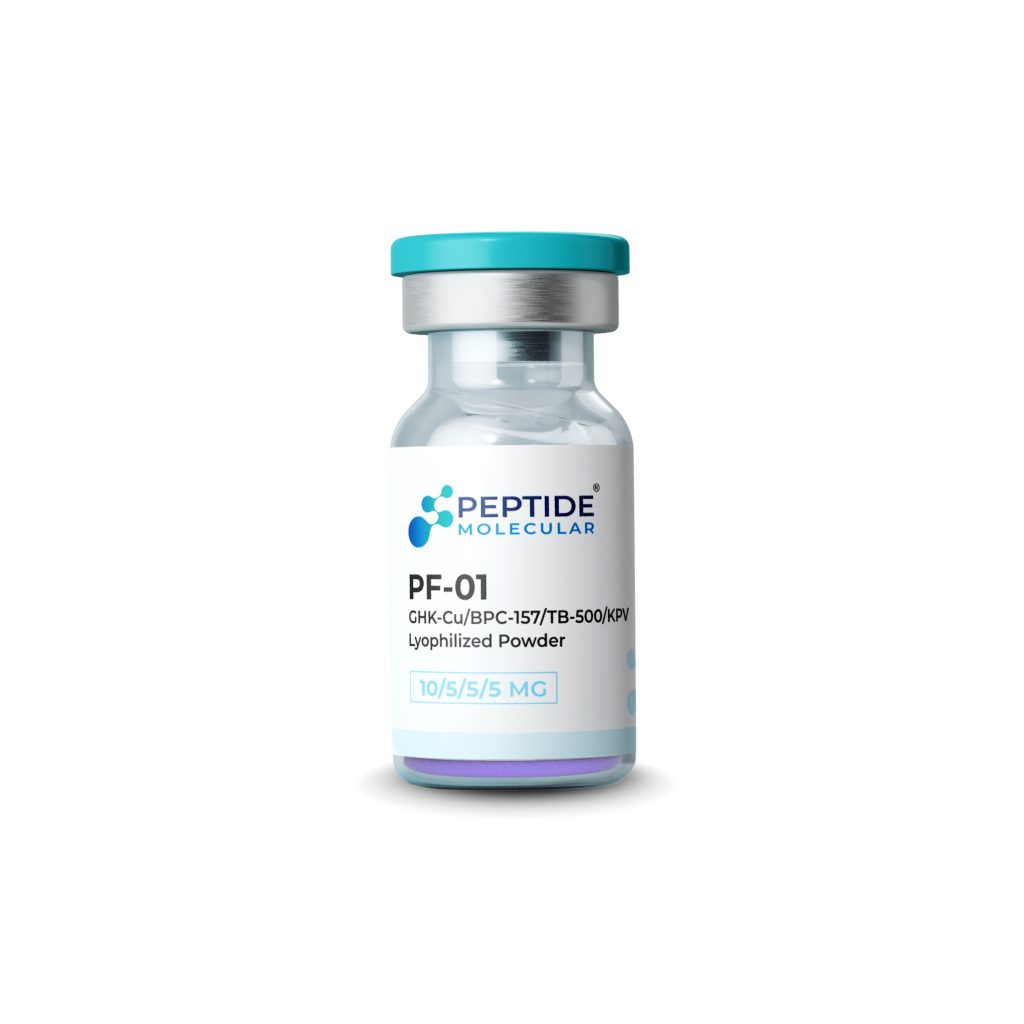
Research Product
GHK-Cu / BPC-157 / TB-500 / KPV
1. Product Overview
GHK-Cu / BPC-157 / TB-500 / KPV is a multi-component research peptide blend combining Copper Tripeptide-1 (GHK-Cu), BPC-157, TB-500, and KPV in a standardized formulation. Each component has attracted scientific interest in studies involving cellular signaling, tissue remodeling, extracellular matrix regulation, peptide-mediated biological responses, and regenerative pathways. The blend is supplied as a lyophilized research peptide formulation and undergoes analytical testing to verify identity, purity, and consistency.
Manufactured in a controlled research environment, this formulation is intended exclusively for laboratory and scientific research applications.
2. Specifications
| Product Name | GHK-Cu / BPC-157 / TB-500 / KPV | Testing Method | HPLC |
|---|---|---|---|
| Synonym | Copper Tripeptide-1 / Body Protection Compound-157 / Thymosin Beta-4 Fragment / KPV | Storage Condition | 2-8C |
| Format | Lyophilized Powder | Shelf Life | 24 Months |
| Content | 25 mg per vial | Manufacturing Standard | GMP Standard Research Environment |
| Purity | >=99% HPLC | Country of Origin | USA |
| Appearance | Blue Lyophilized Powder | Intended Use | Research Use Only |
3. Research Summary
GHK-Cu / BPC-157 / TB-500 / KPV is a multi-component research peptide blend combining Copper Tripeptide-1 (GHK-Cu), BPC-157, TB-500, and KPV in a standardized formulation. This blend has attracted scientific interest in studies involving cellular signaling, extracellular matrix regulation, tissue remodeling, angiogenesis, epithelial biology, cellular migration, and regenerative biological pathways.
Research involving GHK-Cu has explored gene expression and extracellular matrix-related mechanisms, while BPC-157 and TB-500 have been investigated in tissue response, vascular biology, and cellular migration research. KPV has attracted interest for its interaction with peptide-mediated cellular signaling pathways. Ongoing laboratory studies continue to evaluate the combined activity of these peptides in regenerative and cellular research models.
4. Scientific References
- Pickart L, Margolina A. Regenerative and Protective Actions of the GHK-Cu Peptide in the Light of the New Gene Data. International Journal of Molecular Sciences. 2018;19(7):1987.
- Sikiric P, Seiwerth S, Rucman R, et al. Stable gastric pentadecapeptide BPC-157: Novel therapy in gastrointestinal tract and beyond. Current Pharmaceutical Design. 2011;17(16):1612-1632.
- Goldstein AL, Hannappel E, Kleinman HK. Thymosin β4: Actin-sequestering protein moonlights to repair injured tissues. Trends in Molecular Medicine. 2005;11(9):421-429.
- Malinda KM, Goldstein AL, Kleinman HK. Thymosin beta 4 stimulates directional migration of human umbilical vein endothelial cells. FASEB Journal. 1997;11(7):474-481.
- Ceriani G, Diaz J, Murphree S, Catania A, Lipton JM. The neuropeptide alpha-MSH and its tripeptide derivative KPV regulate inflammatory responses in experimental models. Peptides. 1994;15(4):717-725.
Disclaimer: This product is intended strictly for research use only. It is not intended for human consumption, clinical application, diagnostic procedures, therapeutic use, veterinary use, or household use. The information provided is for scientific and educational reference purposes only and should not be interpreted as medical advice, treatment guidance, or usage instructions. This product should be handled only by qualified professionals trained in laboratory practices. Purchasers and end users are solely responsible for ensuring compliance with all applicable laws, regulations, and institutional requirements governing the purchase, storage, handling, and use of research materials.